
For anyone still trying to make sense of a relationship that never made sense.
The Collective is The Healthy Relationship Company's membership for people working out what happened in a controlling or manipulative relationship. Each month you learn how coercive control works, from both sides, through mini-courses, a live workshop, weekly answers to members' questions and a private community where nobody needs your real name.
Doors open in January 2027. Join in the first week and the founding price of £25 a month or £250 a year is locked for as long as you stay. People on the waitlist hear first, and get a free case file to read while they wait.
100k+
followers across social media
15,000
people signed up to the weekly Clarity Drop
148
countries where people have used our resources
Hundreds
of courses taken

Created by Eve Howe-Robinson, forensic and behavioural psychology specialist and domestic abuse expert, whose work spans the prison service, refuge services and specialist programmes for people who cause harm.
Wherever you are with it
Maybe this is where you are right now
"Was it really that bad?"
You can list what happened and it still doesn't sound like enough. You keep a mental note of the good days in case you're being unfair. Part of you wonders whether you're just too sensitive, and another part is tired of wondering.
"I know it wasn't good, so why is this hitting me so hard?"
Your head knows you did the right thing. Your body hasn't caught up. You check your phone without meaning to, replay old arguments and win them this time, and feel embarrassed by how much space it still takes up.
"It's been years. Why does it still run the show?"
You've read the books and done the therapy, and you can explain what happened. You still ask permission in your head before you buy something, say no or make a plan. Calm feels suspicious, and a small part of you worries about choosing another one like them.
"I want to see it coming next time."
You're doing well and you'd like it to stay that way. You want to spot the early signs in dating, friendships, family and work, before anything has a chance to take hold.
Most people recognise themselves in more than one of these, and move between them over time. The Collective is built for all four.
“
It's embarrassing to admit but I literally assess risk for a living… and I couldn't make sense of my own relationship. Eve explained it in a way that didn't make me feel stupid. I feel calm about it now. That's new.
Laura, 36 · The Relationship Reality Check
Short answers, with the depth inside
The questions you've typed into a search bar at 2am
These are the questions people ask most often before they find us. Here are short answers. Inside the Collective, each one gets the depth it deserves.
Was it abuse if they never hit me?
Coercive control is a pattern of behaviour that limits your freedom and wears down your sense of yourself: monitoring, isolating, undermining, punishing and rewarding. It's a crime in the UK, Ireland and parts of Australia, and recognised in law in some US states, because it can do as much lasting harm as physical violence. Nothing physical has to happen for it to count.
Explored on the Confusion and Learning the Pattern shelves.
Why can't I just move on?
Unpredictable kindness bonds people more strongly than consistent kindness does, and a nervous system that spent months or years scanning for the next change of mood doesn't switch off because the relationship ended. The pull you feel is a conditioned response. It makes complete sense, and it can be retrained.
Explored on the Emotional Regulation shelf and in The Emotional Detox.
Why did they do that?
Controlling behaviour usually grows out of beliefs: what someone thinks they're entitled to, what they think a partner owes them, and what they believe will happen if they lose control. Eve spent years working directly with those beliefs. The Collective teaches from inside that reasoning, without handing you a diagnosis to pin on someone you can't assess.
Explored in Inside the Perpetrator's Mind.
Why did I stay so long?
Control is introduced gradually, and each step on its own seems reasonable. Hope, investment, fear and a shared life all hold people in place. Intelligence offers very little protection, because the qualities that make someone good in a relationship (empathy, fairness, looking at their own part first) are exactly the ones these patterns rely on.
Explored on the Learning the Pattern shelf and in The Manipulation Decoder.
Is it me? Was I the problem?
People who are being controlled often end up asking this, partly because the person controlling them taught them to. A tactic called DARVO (deny, attack, reverse victim and offender) turns every complaint back on the person who raised it. Asking the question is a sign of conscience. The Collective helps you separate what was yours from what was theirs.
Explored on the Confusion shelf.
How do I make sure it never happens again?
Early patterns are readable once you know what to look for, and you can learn to assess anyone by how consistent, clear, accountable and reciprocal they are, and by how steady your body feels around them. Boundaries get simpler too, often one calm sentence followed through.
Explored on the Assertive Boundaries and Relational Self-Actualisation shelves.
Each of these gets the full answer inside the Collective. Joining the waitlist is free.
Why this is different
The Collective explains what sits underneath the label
Words like "narcissist" name a type of person and then stop. You can't diagnose someone you lived with, and knowing a label doesn't explain why the confusion felt so convincing at the time, or why it's still affecting you now.
The Collective explains the mechanism: how each tactic works on a decent, thoughtful person, and what it did to your thinking, your body and your sense of who you are.
Understanding is where it starts. Knowing what happened and feeling different are run by different systems, so every part of the Collective pairs the psychology with practical tools for your nervous system, your boundaries and your choices.
Inside the Perpetrator's Mind
The part almost nobody else can teach you
Most support for people leaving controlling relationships looks at what happened to you. Very little explains what was going on in the other person's head, because very few people have spent time inside it. Eve has. She has spent years in one-to-one behaviour change work with people assessed as the highest risk to their partners, listening to how they explain what they did and to the reasoning that makes control feel justified to the person using it.
That reasoning has recognisable features: entitlement about what a partner owes them, thinking errors that shrink the harm and shift the blame, a habit of recasting themselves as the injured party, and beliefs about gender, family and respect learned long before you met them. Once you can see that structure, the behaviour stops looking random, and it stops looking like a response to anything you did.
This is the space in the Collective where that is taught, from inside their reasoning rather than from a list of warning signs. It answers the question that tends to outlast everything else, which is why they did it, without asking you to diagnose anyone. If you've watched the free series of the same name on YouTube, this is where it goes much further.
What they say
“You made me do this.”
What's underneath
Blame is placed outside them, so the problem always sits with you and change is always your job. It means they never have to look at their own behaviour.
What they say
“I said sorry. What more do you want?”
What's underneath
The apology is used to close the subject. Once it's been said, any further upset becomes your problem, and nothing about the behaviour has to change.
What they say
“You're making a big deal out of nothing.”
What's underneath
Minimisation shrinks the harm until it no longer seems to require anything from them. Said often enough, it teaches you to shrink it too.
What they say
“After everything I do for you.”
What's underneath
Entitlement turns care into a debt. Their effort becomes the reason you owe them agreement, attention or silence, and any objection is treated as ingratitude.
“
I'd read so much about coercive control but it always felt like I was reading about what happened to me, not why it worked. The perpetrator psychology module was the first time I understood it from the other direction. That's what made it make sense.
Jess, 37 · The Relationship Reality Check
Inside the Perpetrator's Mind holds The Perpetrator Profile mini-course when it's released, workshops such as How They Actually Think, and Eve's forensic breakdown at the end of every monthly case file.
This is taught in full inside the Collective. Joining the waitlist is free.
Your questions, answered in depth
The question you can't stop thinking about deserves a real answer
Messages arrive every day asking Eve about something specific: why someone went silent for three days and then behaved as if nothing had happened, whether it counts as control when they never stopped you seeing friends but sulked every time you went, or why one apology could undo months of clarity. Those questions deserve far more than a two-line reply, and there are too many of them for Eve to answer one by one.
The Collective gives them somewhere to go. You send your question through one private form, without your name attached, and each week Eve answers members' questions in audio, in the same depth and detail people know from her videos, with a written version underneath. She explains the psychology behind what happened, what it usually means and what tends to help, without anything that could identify who asked.
Over time those answers become a library shaped by members. What gets covered is decided by what you're actually living with, rather than by what someone guessed you might want.
How it works
✦ Send your question through the private form whenever it comes to you.
✦ Eve answers members' questions every week.
✦ Listen to the audio or read the written version, whichever suits the moment.
✦ Every answer stays in the library, organised by topic, so you can find the ones that speak to your situation.
Members can send their first question as soon as doors open.
Inside the Collective
What a month in the Collective looks like
✦
The monthly case file
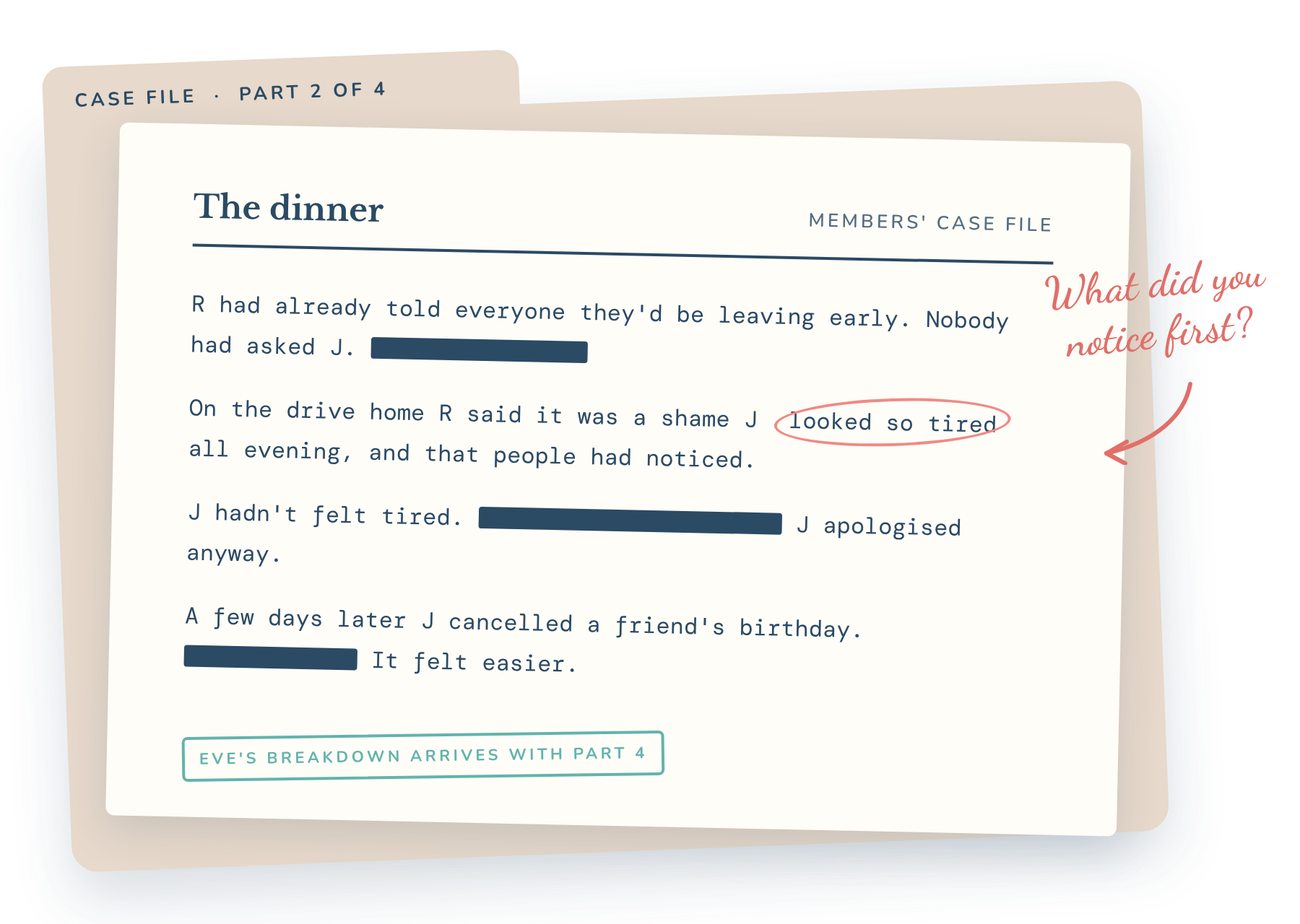
Each month you follow one case, built from patterns Eve has seen again and again in her work, released in instalments the way control really unfolds: slowly, a little at a time. You read each part before anything is explained and notice what stands out to you.
At the end of the month Eve takes the whole case apart and shows what was happening underneath each moment and why it worked. It rebuilds the skill control wears down most, which is trusting what you noticed while it was still happening.
Join the waitlist and you'll receive a complete case file by email, free, while you wait.
✦
A live workshop
Once a month Eve teaches one topic in depth, sometimes alongside a guest expert. You can send questions in advance without your name attached, and the recording is in the library within a few days if you can't join live.
✦
Your questions, answered each week
Send yours through the private form, and each week Eve answers members' questions in audio, with a written version underneath.
✦
A community that already understands
People who get it without needing the backstory. Members share what they're noticing and talk through what they're learning, with a weekly discussion question that makes it easy to join in.
✦
One round-up email
At the end of each month, everything that's been added, in one place, so nothing passes you by.
There's no right way to use any of this. Some members follow every part of the month and others dip into the library when they need it.
Free to join, with a complete case file to read while you wait.
“
I'm not even sure what service I'm after, I'm just looking to be understood as it's a lonely place
From a message sent to The Healthy Relationship Company
The community
Somewhere you don't have to explain yourself
Coercive control works partly by cutting people off, and the isolation often lasts long after the relationship ends. Friends and family may not understand why you stayed, why you're still affected, or why one message from them can wreck a whole day.
Inside the Collective there's a private community of people who already understand all of that. You don't have to explain the backstory or justify how you feel. Members share what they're noticing, talk through what they're learning, and ask each other the questions they can't ask anyone else in their life. Seeing someone describe the exact thing you thought only happened to you does a lot of the work on its own.
Everyone uses a display name that can't identify them, the community is moderated, and you can post, reply or simply read along. Most people start by reading.
Free to join, and you can leave the list whenever you like.
The library
A library organised around how recovery actually happens
Everything in the Collective sits on six shelves. Five follow The CLEAR Relationship Method™, The Healthy Relationship Company's framework for understanding and recovering from controlling relationships, and the sixth looks at the other side. Find the question that sounds most like yours, start there, and move around as you need to.
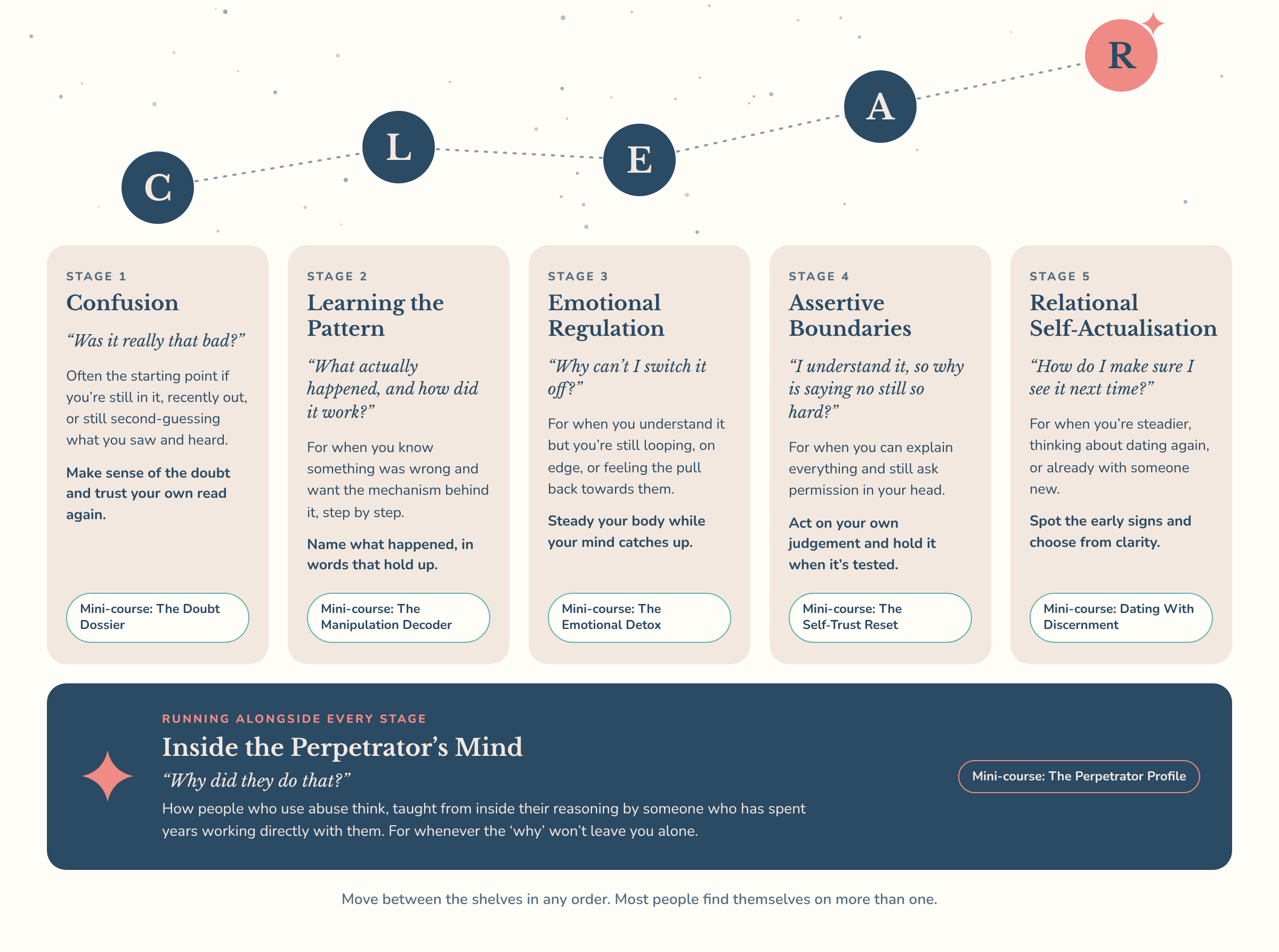
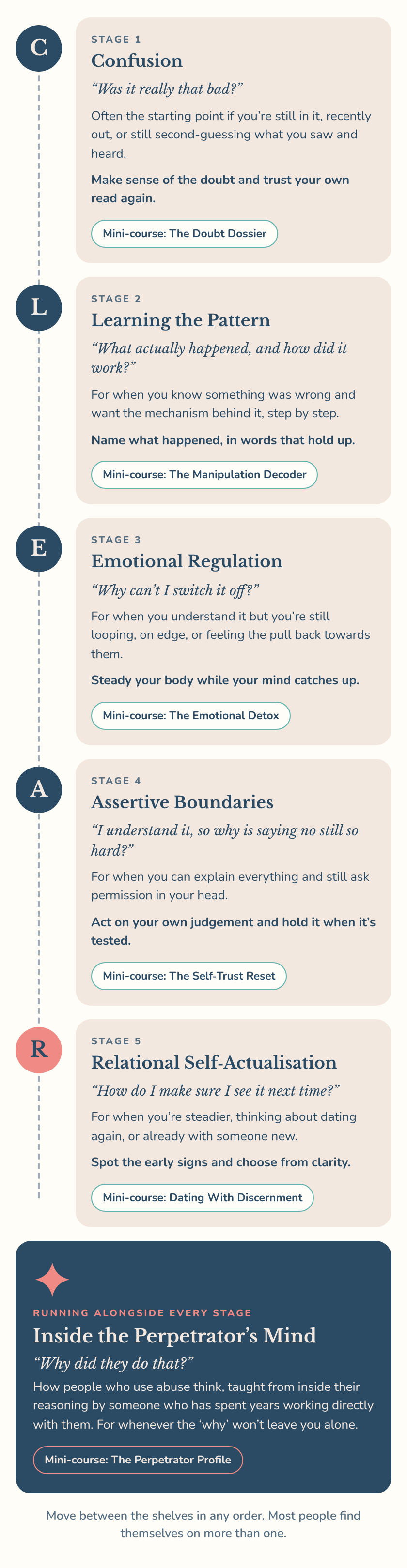
Six mini-courses, one for every shelf
Each mini-course is sold separately for £47, and all six are part of membership. The Manipulation Decoder and The Emotional Detox are there from the day you join. The Doubt Dossier, The Self-Trust Reset, Dating With Discernment and The Perpetrator Profile are added as they're released, at no extra cost to members.
Around each course sit toolkits and guided exercises that take what you've learned and apply it to your own situation: mapping the pattern in your own relationship, working out what you're really reaching for when the pull to make contact hits, or planning what you'll say when a boundary gets tested. They're how understanding turns into something you can use in everyday life.
A look inside
A few of the courses, workshops and toolkits already waiting on the shelves.
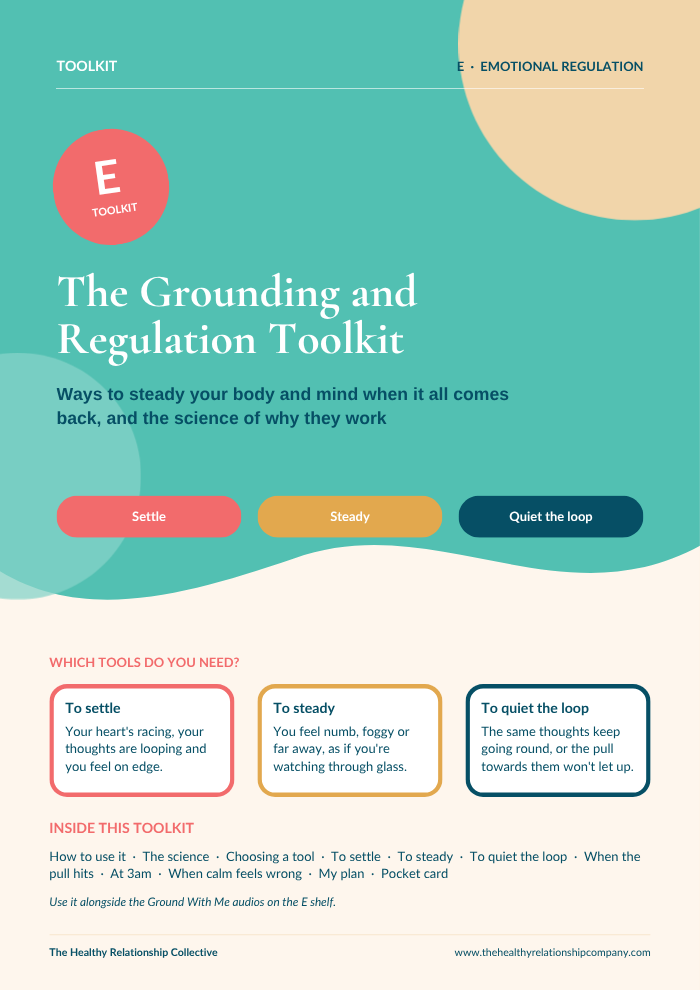
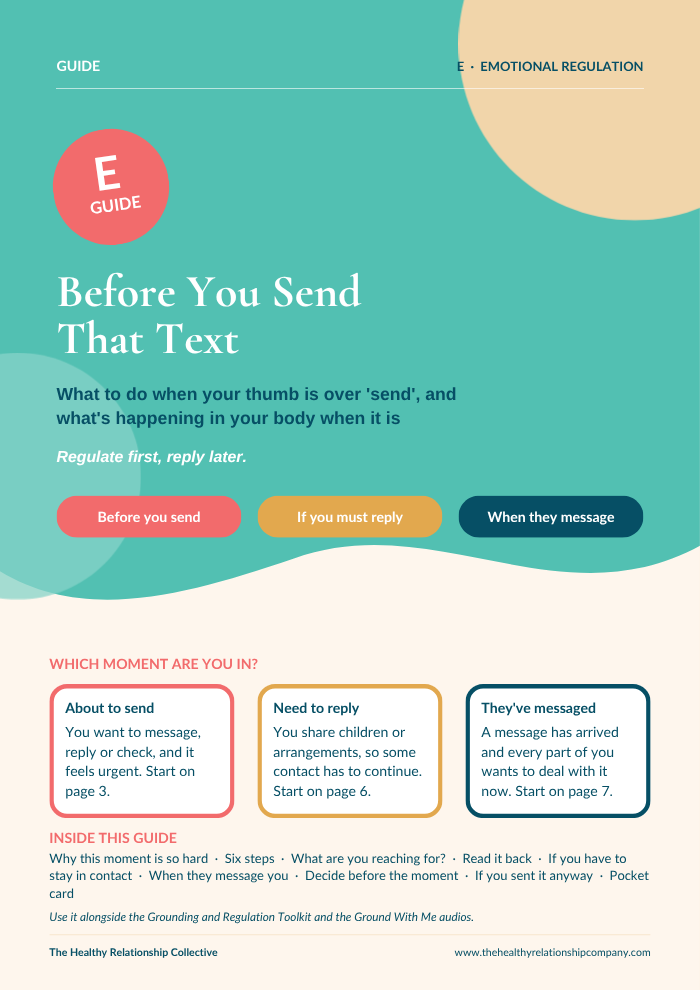
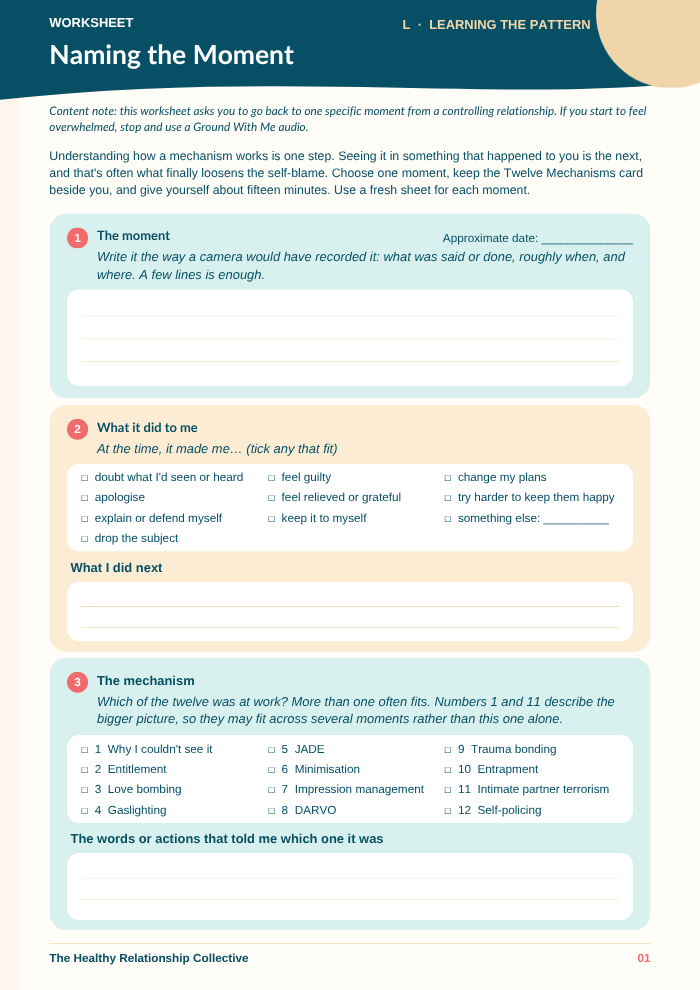
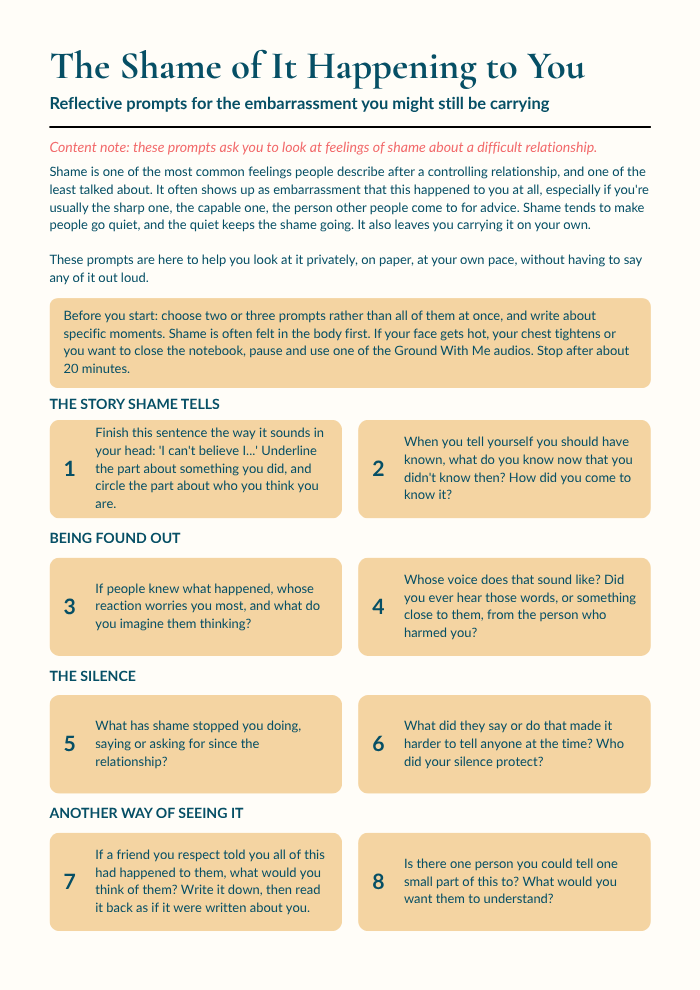
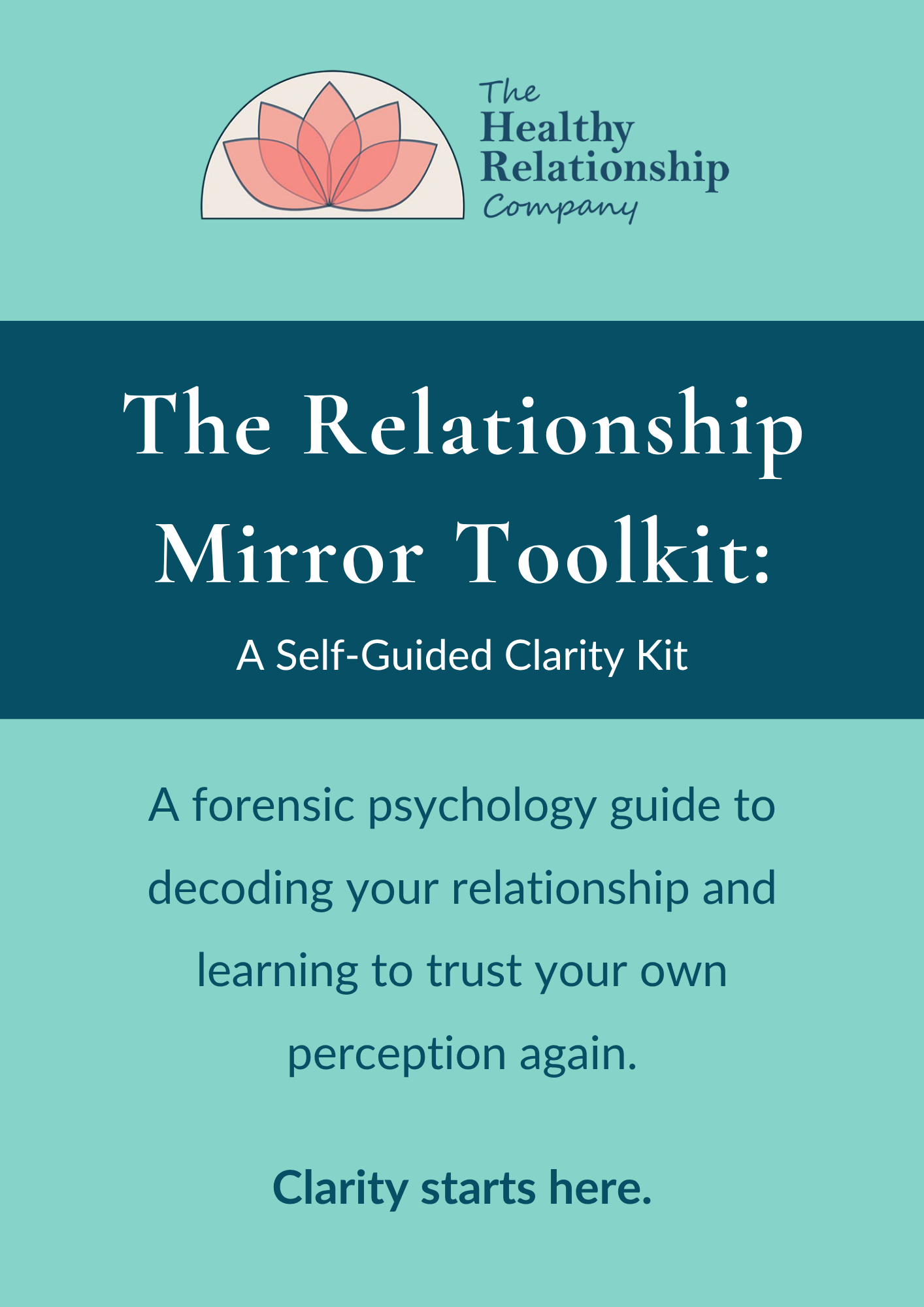
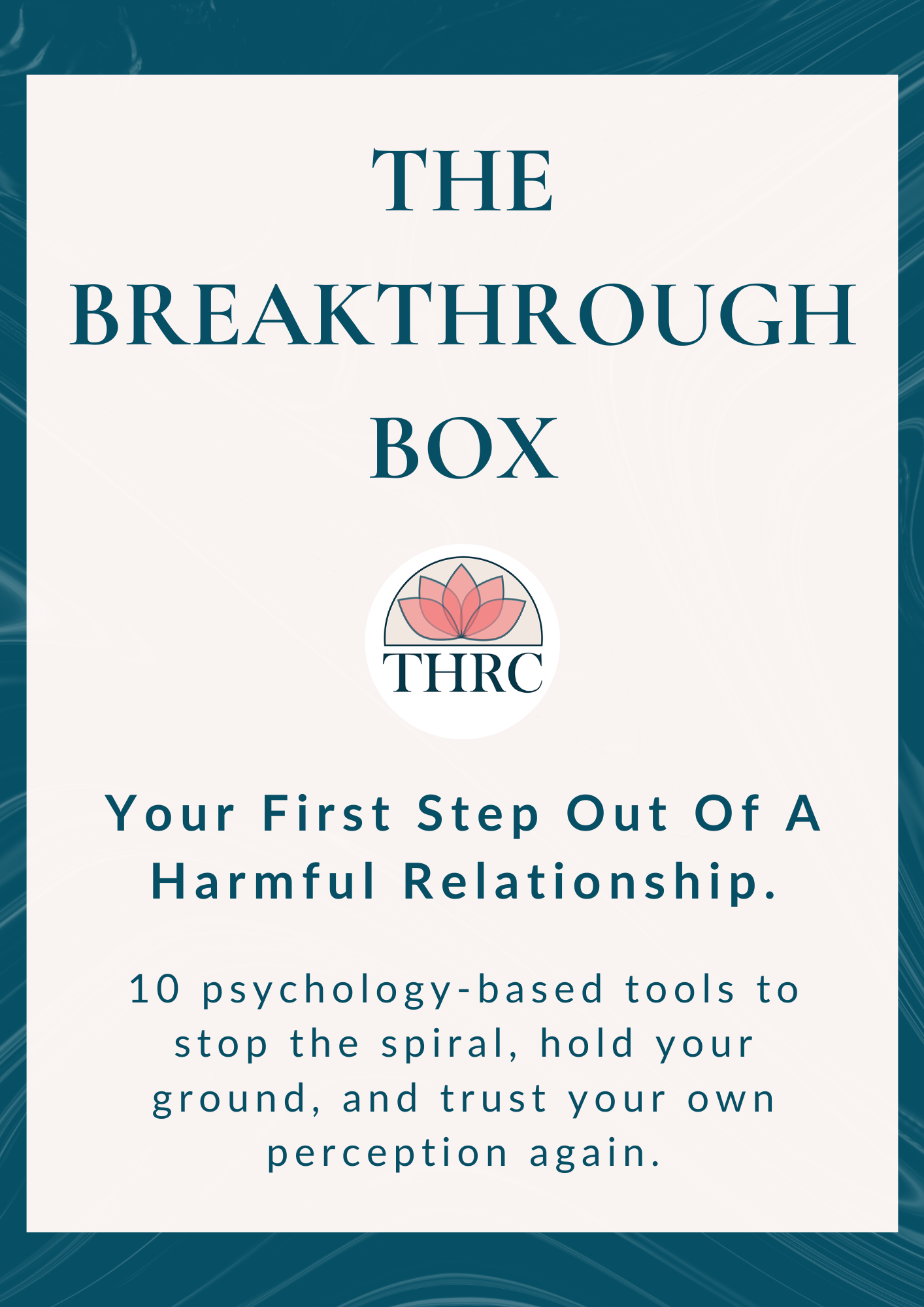
The Manipulation Decoder and The Emotional Detox are there from the day you join.
What it gives you
What changes when it finally makes sense
You can say what happened, in words that hold up, including the term a professional would use and the phrase a lawyer would recognise.
You know which loop you're in at 2am, and you have a way out of it that takes about ninety seconds.
You stop explaining yourself over and over. You set a boundary in one calm sentence, and you read the pushback as the boundary working.
You understand why they did it, so it stops feeling like a verdict on you.
You notice the early signs months sooner, and calm starts to feel safe rather than suspicious.
You trust your own read of people again, a little more each month, until you make your own decisions without asking permission in your head.
Free to join, and it doesn't commit you to anything.
In their words
What people say about learning with Eve
“
I was still in the relationship when I started. I didn't want to be told to leave, I just wanted clarity. Instead of pressure, I got understanding. I could see what was happening without spiralling. The decision felt clear, not forced.
Tiff, 28 · The Relationship Reality Check
“
I knew the red flags. But knowing didn't stop me going back. What changed was finally understanding why I felt so attached. It wasn't that I was naive, I just didn't see the pattern I was in. I stopped blaming myself and started making different decisions.
Hannah, 34 · The Relationship Reality Check
“
The module on criminogenic thinking completely changed how I understood what had happened to me. I'd been blaming myself for years. Once I understood the psychology behind it, the self-blame just went.
Sarah, 41 · The Relationship Reality Check
“
Your content is fantastic - and, believe me, I have read so, so much on coercive control and emotional abuse
From a message sent to The Healthy Relationship Company
Hear first when doors open in January.
Safety first
Built for people who need to stay private
A name that can't identify you
You choose your display name, and nobody needs to know you're a member unless you tell them.
No private messages
Members can't message each other privately. Every conversation happens in the open community, where it's moderated.
Clear community rules
No names, no identifying details, and nobody questions anyone else's experience. Anything that breaks the rules is edited or removed.
A Leave Site button
The button in the corner of every page takes you straight to another website in one tap. It doesn't clear your browser history, so use a private window if that matters to you.
Discreet billing
Payments show on your bank statement as THRC LTD. Nothing on the statement mentions relationships or the Collective.
Education, not crisis support
If you need help now, the support list at the bottom of this page covers the UK, Ireland, the US, Canada, Australia, New Zealand and everywhere else.
Joining the waitlist only needs a first name and an email address, and the name can be anything you like.
A note from Eve
Why we built the Collective this way
I've always wanted to know why people behave the way they do, and why some people turn out good and some turn out cruel. That question took me through a degree and a master's in forensic psychology, then into the prison service, a refuge, and years of one-to-one behaviour change work with the people assessed as the highest risk to their partners.
I listened to every kind of crime in that time. Domestic abuse was the one that got under my skin. Someone makes themselves your safe place, you trust them with everything, and then they dismantle you from the inside. Home is supposed to be where you recover. With domestic abuse, home is where it happens.
I once worked with a woman who had spent more than ten years with a man who controlled every part of her life. When we met she could barely leave the house and called herself stupid. Over months, we unpicked what had happened and why it had worked, and she stopped needing it to be her fault. By the end she stood in front of a room of professionals and talked about her life. That's what understanding, plus a safe space to work through it, can do.
The Collective is built on that. One hour a week with a professional, if you can get it, still leaves a lot of hours in between. People need the explanation they were never given, available when they need it, at 2am, around their job and their family, for as long as it's useful. Being in control of your own membership matters too, so you can leave whenever you like, without having to explain yourself to anyone.
Eve
BSc and MSc in Forensic Psychology. Qualified in perpetrator intervention and trauma-informed practice, and in psychological risk assessments including HCR-20, SVR-20 and SARA-V3. Qualified Designated Safeguarding Lead and peer supporter. Years of experience helping to design and set up specialist domestic abuse services. Training as a Domestic Homicide Review Chair.
Who the Collective is for
It's for you if
you've been in a relationship that left you doubting your own judgement, whether it was a partner, an ex, a parent or someone else close to you. You might still be in it, just out, or years on. It's open to anyone, wherever you live and whatever your gender. The teaching is gender neutral and makes no assumptions about who caused the harm. Many of the stories and testimonials come from women, and everyone is welcome.
It isn't for you if
you're in immediate danger (please contact one of the services at the bottom of this page first), if you're looking for one-to-one therapy or individual advice, or if you want someone to confirm that the other person is a narcissist. The Collective explains behaviour rather than diagnosing people.
If the first of these sounds like you, joining the waitlist is free.
Founding membership
Become a founding member
Most people who reach this part of the page have spent months, sometimes years, trying to piece it together on their own, late at night and around everything else. The Collective opens in January 2027. Join the waitlist and you'll hear first, get early access before anyone else, and lock in the founding price.
Join the waitlist
By joining you'll also receive The Healthy Relationship Company's weekly emails. You can unsubscribe at any time. This site is protected by reCAPTCHA, and the Google Privacy Policy and Terms of Service apply.
The founding price
£25 a month
or £250 a year, which is two months free. That works out at under £6 a week, or under £5 a week paid yearly, less than a single private therapy session costs in most places.
✦ From the day you join you have The Manipulation Decoder and The Emotional Detox (£94 if bought separately), with four more mini-courses added as they're released.
✦ The founding price is open to everyone who joins in the first week after doors open. After that, new members pay £29 a month or £290 a year, and founding members keep £25 for as long as they stay.
✦ Cancel online whenever you like, without contacting anyone or giving a reason.
✦ If it isn't right for you within 14 days, you get a full refund.
✦ If you've been through The Relationship Reality Check or bought one of the mini-courses, there's an extra founding discount for you, and the details come in the waitlist emails.
Join if it feels right. If it doesn't yet, everything here will still be here when you're ready.
Before you decide
Questions people ask before joining
I'm still in the relationship. Is this safe for me?
Many members are. Use a display name that can't identify you, a private email address, and the Leave Site button in the corner of the page if you need it. If you're worried about your safety, please contact one of the services at the bottom of this page first.
Will anyone know I'm a member?
Only if you tell them, or post under a name they'd recognise. Your display name is your choice, and members can't message each other.
What will show on my bank statement?
THRC LTD. Nothing on the statement mentions relationships or the Collective.
Will the content bring everything back up?
Some of it will touch on things you've lived through, because that's what it's about. You choose what to open and when, nothing is sprung on you, and the tools for steadying your nervous system sit alongside the psychology throughout. If something is too much on a given day, close it and come back another time. Everything stays in the library.
Could the person who harmed me join?
Anyone can buy a membership, so we can't rule it out, and it's sensible to assume anything you post could be read by someone else. That's why display names can't identify you, members can't message each other, the rules ban names and identifying details, and the community is moderated. If you're worried, read along without posting. You'll still get everything the Collective offers.
Was what happened to me bad enough to join?
If you're asking, that's reason enough. You don't need a label, a diagnosis or a police report to be here, and many members only found the words for what happened after they joined.
I've had therapy and read a lot. Will this be different?
Very likely. Most resources explain what happened to you. The Collective also explains how the person causing harm thinks, drawing on years of work with them directly, and pairs that with tools you use in real time. It works well alongside therapy.
How is this different from the free videos and posts?
Each free video or post explains one piece. The Collective puts the pieces together in order, goes much further into how the person causing harm thinks, and gives you the tools, case files and weekly answers to apply it to your own situation. If the free content has helped, this is where it goes further.
I don't have much time or energy. Will I use it?
The Collective is built for that. Weekly answers are short, the monthly round-up brings everything into one email, and you can dip in only when you need to. Nothing has a deadline, and everything is recorded.
Do I have to post in the community?
No. Many members never post, and everything works without it.
Is it only for women?
No. It's open to anyone who has been through a controlling or manipulative relationship.
I don't live in the UK. Can I join, and what about the time difference?
Yes. Most of the people who follow The Healthy Relationship Company live outside the UK. Prices are in pounds sterling and your bank converts them automatically. Every workshop is recorded and in the library within a few days, so you never need to be awake at an odd hour to get the full benefit.
Is The Relationship Reality Check included?
No. RRC is a separate, in-depth programme that runs in cohorts. Members hear first when a new cohort opens.
I've already bought a course from The Healthy Relationship Company.
You keep it for good, whether you join or not. The Manipulation Decoder and The Emotional Detox are also inside the membership. If you've been through The Relationship Reality Check or bought one of those courses, there's an extra founding discount for you, and the details come in the waitlist emails.
Can I get one-to-one support?
The Collective is education, so it doesn't include individual support. You can send questions anonymously each week, and the services at the bottom of this page can support your situation directly.
What if it isn't right for me?
Email within 14 days for a full refund. After that, cancel online whenever you like, and your access continues to the end of the period you've paid for.
When does it open, and how much is it?
Doors open in January 2027. The founding price is £25 a month or £250 a year, which is two months free, for everyone who joins in the first week after doors open, and it stays the same for as long as you remain a member. After that week, new members pay £29 a month or £290 a year. The waitlist hears first.
When you're ready, the Collective will be here
Join the waitlist to hear first when doors open and to get the founding price.
Not ready for a membership yet? The free Clarity Check-In is a good place to start.
If you need support now
In an emergency, call your local emergency number: 999 in the UK, 112 or 999 in Ireland, 911 in the US and Canada, 000 in Australia, 111 in New Zealand.
England: National Domestic Abuse Helpline, 0808 2000 247 (free, 24 hours). Wales: Live Fear Free, 0808 80 10 800. Scotland: Domestic Abuse and Forced Marriage Helpline, 0800 027 1234. Northern Ireland: Domestic and Sexual Abuse Helpline, 0808 802 1414.
Ireland: Women's Aid National Freephone Helpline, 1800 341 900 (24 hours). United States: National Domestic Violence Hotline, 1-800-799-7233, or text START to 88788. Canada: find your nearest service at sheltersafe.ca. Australia: 1800RESPECT, 1800 737 732. New Zealand: Women's Refuge crisis line, 0800 733 843.
Anywhere else: findahelpline.com lists free, confidential helplines in most countries.